
Seasonal Affective Disorder
The “45th Parallel” Factor
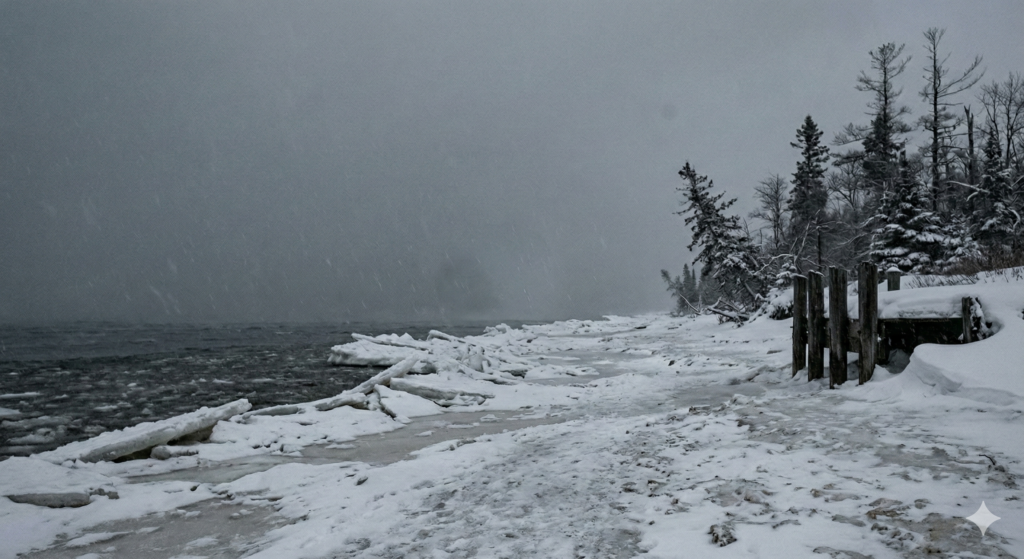
Living “Up North” comes with a unique biological tax. In places like Petoskey or Traverse City, we sit near or above the 45th parallel. While Detroit gets about 9 hours of daylight on the winter solstice, folks in the Upper Peninsula see around 8 hours and 30 minutes. To complicate matters further, between November and March, you can expect an average of about 100 to 110 “cloudy” or “mostly cloudy” days. Because of our proximity to the Great Lakes, this region is actually one of the cloudiest in the entire United States during the winter, making seasonal affective disorder a unique challenge.
In fact, during the peak of winter (January), we typically see less than 25% of possible sunshine. To put that in perspective, out of the roughly 9 hours of daylight we get, the sun is only peeking through for about 2 of them on average.
It’s not just in your head—it’s in the atmosphere. Statistics show that:
- 1 in 4 Michiganders experience some form of “winter blues.”
- 5% of the population suffers from clinically diagnosed SAD.
- The “Vitamin D Gap”: Dr. Michael Lucido of Munson Healthcare notes that most people living north of the 37th parallel are Vitamin D deficient. In winter, the sun’s angle is too low for our skin to produce it.
How to Spot the “Winter Blues” vs. SAD
It’s normal to feel a bit “meh” when it’s 10°F and blowing sideways. However, SAD is a specific type of depression that follows the seasons. Here is how to identify the signs:
The Common “Hibernation” Symptoms:
- Carb Craving: An intense, almost magnetic pull toward bread, pasta, and sweets (your body’s way of trying to get a quick serotonin boost).
- Oversleep: Feeling like 10 hours of sleep isn’t enough and struggling to “boot up” in the morning.
- Social Retreat: Canceling plans because the couch feels like the only safe place.
- The “Lead” Feeling: A heavy sensation in your arms and legs, making simple chores feel like trekking through waist-deep powder.
Beating the Big Gray
The first steps? There are ways to help get through the cold and gray: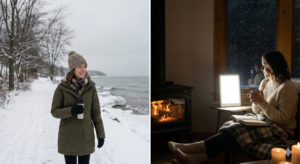
- Light Therapy: A 10,000-lux light box (often called a “SAD lamp”) can mimic the sunlight we’re missing. Just 20–30 minutes in the morning while you drink your coffee can reset your internal clock.
- The Optimist Mindset: There is interesting research out of Norway that reveals our mindset towards winter has a large impact on how we survive the winter months. Stay tuned for more on this research and what it teaches us in another post. .
- Supplement Wisely: Talk to your doctor about Vitamin D. In Northern Michigan, we often need a little extra help since we can’t get it from the sun between October and April.
When to Seek Help
There is a difference between being “winter weary” and being in danger. In the cold, long winter months isolation can turn a “blue” mood into something more serious.
You should reach out to a professional if:
- Your “hibernation” is preventing you from going to work, caring for yourself or your family.
- You feel a sense of hopelessness that doesn’t lift, even on a rare sunny day.
- You are using alcohol or substances to “numb” the winter.
- Immediate Help: If you or someone you know is in crisis, call or text 988 (the Suicide & Crisis Lifeline). It is free, confidential, and available 24/7.
Northern Michigan winters are long, but they don’t have to be dark. Our trained therapists can help, in-person or virtually if the roads are too bad!
Call: 231-715-8466
Text: 231-715-1491
Read about our therapists here
or sign up here.